Advertisement
Middle managers often sit in a pressure cooker. They're expected to interpret and carry out upper management's strategies while staying in touch with day-to-day operations. They juggle expectations, navigate workplace friction, and support both senior leaders and team members. This makes their job one of the most emotionally and mentally demanding in any organization.
Many feel stuck between conflicting priorities, a flood of emails, endless meetings, and the constant need to prove their worth. While AI is often seen as a tool for automating lower-level tasks or aiding top-level decisions, it may be most useful to those in the middle, not by replacing them, but by helping them reclaim time, clarity, and confidence in their work.
Much of a middle manager’s day is spent on routine tasks: approving requests, scheduling meetings, compiling reports, and tracking team performance. These tasks aren't strategic, but they still need doing. AI tools can now handle a good portion of this workload. Natural language processing can summarize meeting notes. Email assistants help prioritize or draft responses. Scheduling tools suggest meeting times across busy calendars, avoiding the usual back-and-forth.
Managers can also lean on AI to generate performance snapshots, pulling data from project updates, peer feedback, and attendance logs. This frees them from digging through files and lets them spend time thinking about how to support each team member. Rather than rushing to compile information, they get the chance to interpret it. That keeps the manager in control while reducing the routine effort it takes to stay informed.
Time saved in these areas builds up. Weekly reports, meeting recaps, and performance reviews are faster to produce and easier to act on. AI can even surface anomalies—missed deadlines, unusual attendance patterns, or project bottlenecks—before they become problems. With those alerts, managers can be proactive instead of reactive.
When repetitive tasks shrink, managers can focus on areas that need judgment, experience, and empathy. AI can identify patterns, but it can’t sit down with an employee and listen. What it can do is flag possible problems—like a sudden drop in productivity or signs of disengagement—based on trends across tools and platforms. This gives managers a chance to step in earlier and with more context.
With more breathing room, they can hold proper one-on-ones, follow up meaningfully, and coach team members who need guidance. It also helps when making decisions. Managers can get real-time data summaries that merge financial performance, engagement levels, and even customer response. Instead of digging through five platforms or asking someone to run a report, they get a snapshot that helps them make choices faster and with better backing.
AI doesn’t remove the need for human leadership—it just puts more time in the hands of the person who is supposed to lead. Strategic conversations and employee development take time and attention. Those things can’t be automated, but they can be made more possible by freeing managers from repetitive overhead.
Middle managers often spend a chunk of their day translating ideas. They explain corporate decisions to frontline employees and distill team challenges for senior executives. Things often get lost between the layers. AI can smooth this process by helping sort, format, and clarify communication. Sentiment tools can monitor morale trends, helping managers address concerns before they grow. Drafting tools can suggest versions of the same message tailored for different audiences.

This is especially useful when updates are urgent or complex. An AI tool can suggest a simplified version for a team-wide email and a more detailed summary for leadership. That saves time and reduces misinterpretation. It also helps prevent managers from being seen as just messengers of bad news. When communication becomes clearer and more purposeful, managers are less likely to get caught in the middle of confusion.
AI can also assist in capturing and distilling feedback from multiple sources. Instead of manually sifting through emails, survey responses, and chat logs, managers can rely on AI to extract trends and key themes. This not only makes their reports sharper but ensures that feedback loops actually function. Transparency improves, and so does team alignment.
There’s always anxiety when new technology enters the workplace. For middle managers, the concern is often that their role might be diminished. But AI doesn’t replace what they do best. It can’t lead a difficult conversation or mediate a team conflict. What it can do is lift the fog of busywork.
Too often, the value of a middle manager goes unseen because their time is swallowed up by hidden labor—keeping everything moving, catching issues early, and keeping teams aligned. AI helps make this work more visible and manageable. Instead of being seen as a bottleneck, managers can be seen as contributors with clearer capacity and stronger insight.
When used as a partner, AI becomes a support system. It handles noise and repetition so managers can show up with presence, focus, and calm. They stop reacting and start leading with intention. And as AI tools evolve, they become better collaborators—learning a manager’s style, preferences, and workflows to provide more relevant assistance. That kind of adaptation doesn’t remove the manager’s role; it makes it more sustainable.
Middle managers connect strategy with everyday work, often without much recognition. Their role is demanding, filled with tasks that leave little time for reflection or leadership. AI offers practical help—cutting down routine tasks, improving communication, and supporting better decision-making. It creates space for managers to think clearly, coach teams, and focus on long-term goals rather than daily firefighting. With the right AI tools, their work becomes more manageable and visible. This isn’t about replacing managers—it’s about helping them lead with intention. Companies that support middle managers through AI won’t just ease pressure; they’ll strengthen leadership where it matters most, turning a hidden weight into a clear advantage.
Advertisement
Learn the top 5 AI change management strategies and practical checklists to guide your enterprise transformation in 2025.

An AI health care company is transforming diagnostics by applying generative AI in radiology, achieving a $525M valuation while improving accuracy and supporting clinicians

Learn how to install, configure, and run Apache Flume to efficiently collect and transfer streaming log data from multiple sources to destinations like HDFS

How a machine learning algorithm uses wearable technology data to predict mood changes, offering early insights into emotional well-being and mental health trends
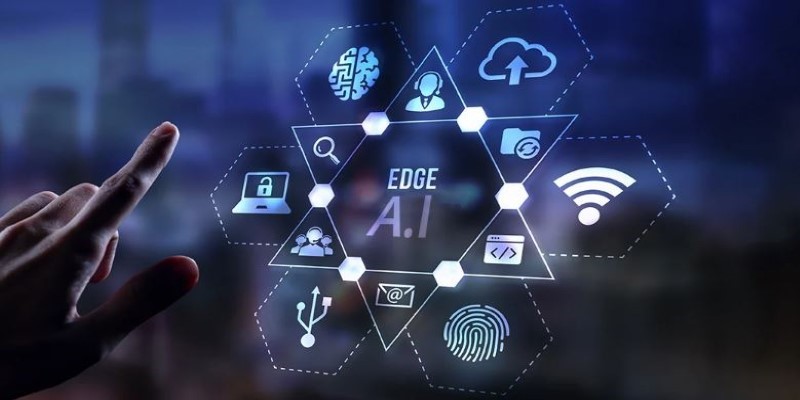
How Edge AI is reshaping how devices make real-time decisions by processing data locally. Learn how this shift improves privacy, speed, and reliability across industries
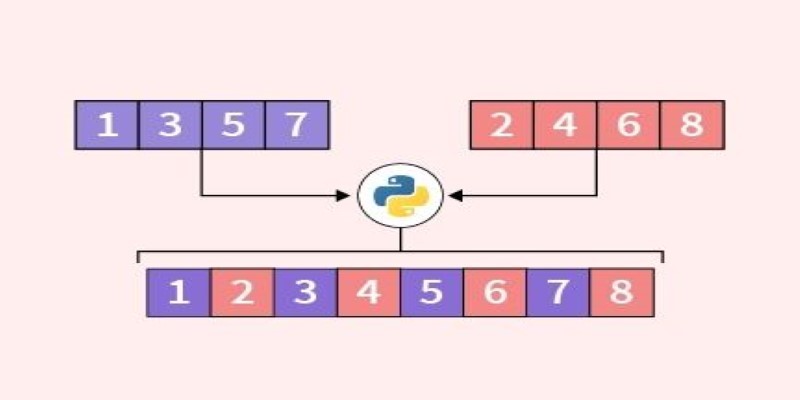
Looking for the best way to merge two lists in Python? This guide walks through ten practical methods with simple examples. Whether you're scripting or building something big, learn how to combine lists in Python without extra complexity

How using open-source AI models can give your startup more control, lower costs, and a faster path to innovation—without relying on expensive black-box systems

How IonQ advances AI capabilities with quantum-enhanced applications, combining stable trapped-ion technology and machine learning to solve complex real-world problems efficiently
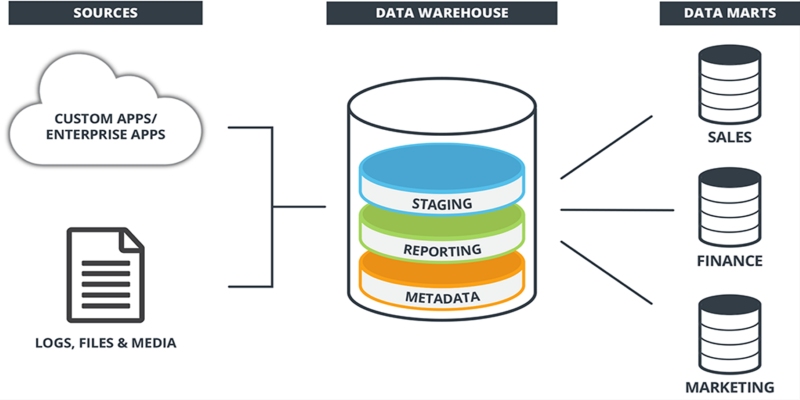
Learn what a data warehouse is, its key components like ETL and schema designs, and how it helps businesses organize large volumes of data for fast, reliable analysis and decision-making
Snowflake's acquisition of Neeva boosts enterprise AI with secure generative AI platforms and advanced data interaction tools
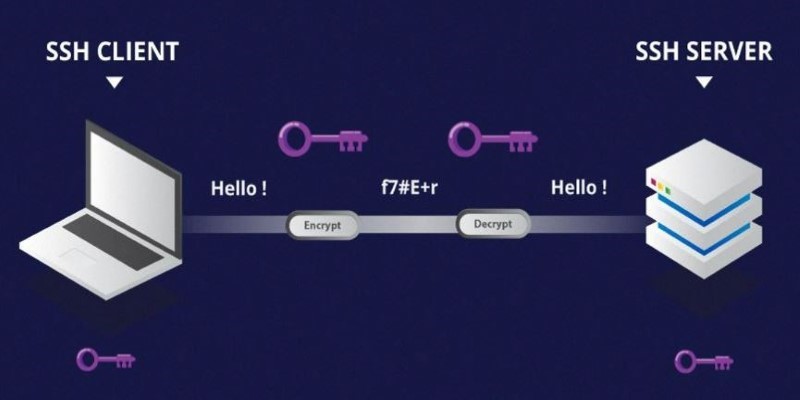
Learn the difference between SSH and Telnet in cyber security. This article explains how these two protocols work, their security implications, and why SSH is preferred today
IBM showcased its agentic AI at RSAC 2025, introducing a new approach to autonomous security operations. Learn how this technology enables faster response and smarter defense