Advertisement
Racing is more than just going fast. It’s about timing every decision, shaving milliseconds where they matter, and adjusting strategies with data that’s both massive and minute. Formula One teams know this better than anyone—and now, one of them is relying on artificial intelligence to help design their cars faster and smarter. Not years from now. This is already happening.
The idea is simple: if AI can help doctors diagnose quicker, or recommend what show to binge next, then surely, it can assist in streamlining one of the most precision-heavy sports on the planet. But here’s the twist—it’s not just about doing things faster. It’s about doing them better and faster.
In the past, a car's improvement came from a mix of track performance, engineering know-how, and driver feedback. Engineers would take note of how the suspension responded, how drag reduced acceleration, or how a tweak to the rear wing played out on turns. But all of this was time-consuming. Endless simulations, wind tunnel tests, and days of trial-and-error formed the core of development cycles.
Now? AI can digest that same flood of input and produce results in hours instead of weeks. The difference is noticeable. Instead of running 50 versions of a component in a wind tunnel, an AI model can test thousands of permutations in a virtual environment. And it doesn’t sleep or get tired of running those simulations over and over.
A single practice lap was used to generate feedback that took days to act on. Today, engineers can adjust designs overnight, basing changes not just on guesswork but on thousands of real-world data points.
Let's break it down. There's a lot of excitement around the term "AI," but in this context, it's not some magic robot replacing engineers. It's a tool, albeit a smart one.
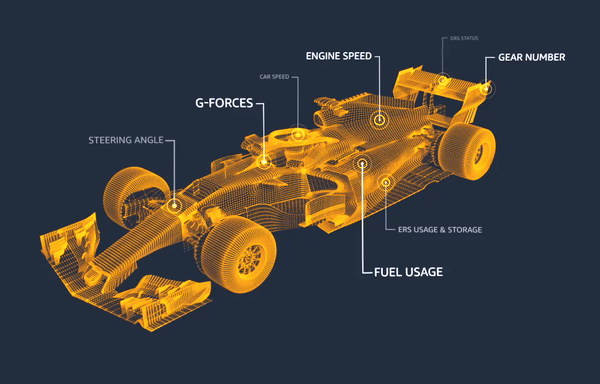
Every race, a Formula One car generates terabytes of data. Think tire temperatures, fuel usage, brake wear, wind resistance, acceleration curves—you name it. AI helps sort and analyze all this in real time. Instead of sifting through mountains of spreadsheets, engineers get streamlined insights and models that point out what’s working and what’s not.
Prototyping takes time and money. AI cuts both down by predicting how new components will perform even before they're made. Want to test a new wing shape or floor layout? AI can simulate how that change will behave under different track conditions, driver inputs, and weather variations—all within hours.
Weight and strength are everything in racing. AI models can now suggest new combinations of materials based on past results, aerodynamic needs, and stress factors. Instead of sticking to the usual carbon fiber blends, teams can explore options they might not have even considered a year ago.
This is where speed meets scale. In traditional design, changes are tested one at a time. With AI, multiple versions can be evaluated simultaneously. That means finding the most efficient design path much faster, without wasting weeks on designs that go nowhere.
If you’re wondering what this process looks like in action, here’s a simplified step-by-step outline of how a Formula One team can actually use AI from concept to car:
Before anything new is created, AI systems are trained on existing data—past races, track performance, sensor data, crash records, pit stop timing, even weather patterns. The goal here is to teach the system what “good” and “bad” outcomes look like.
Using that knowledge, the AI can begin suggesting new design tweaks. These aren't wild guesses—they’re informed predictions, based on every scenario the car might face. It could suggest a slightly altered chassis curve, a revised rear diffuser, or even subtle changes to airflow channels.
This is where things get fast. AI can run simulations that mirror real-world conditions and variables, from tire degradation on hot tracks to sudden downpours on tight circuits. It will rank each version of the design based on performance criteria—drag coefficient, downforce, fuel efficiency, etc.
Top-performing designs go through another cycle, with small changes layered in. Again, everything is tested digitally. Each refinement moves the car closer to optimal performance, and because it’s all virtual, this step can happen multiple times a day.
Once a component gets the green light, it's sent off for physical creation. Even here, AI lends a hand, suggesting efficient manufacturing methods or flagging costly material choices before production begins.
It's easy to hear "AI" and assume that human roles are shrinking. But that's not how things are going. What's changing is the type of work engineers are doing. Instead of spending hours trying to make sense of raw data, they now spend that time fine-tuning strategies, reviewing AI-generated insights, and making creative decisions that the system can't.
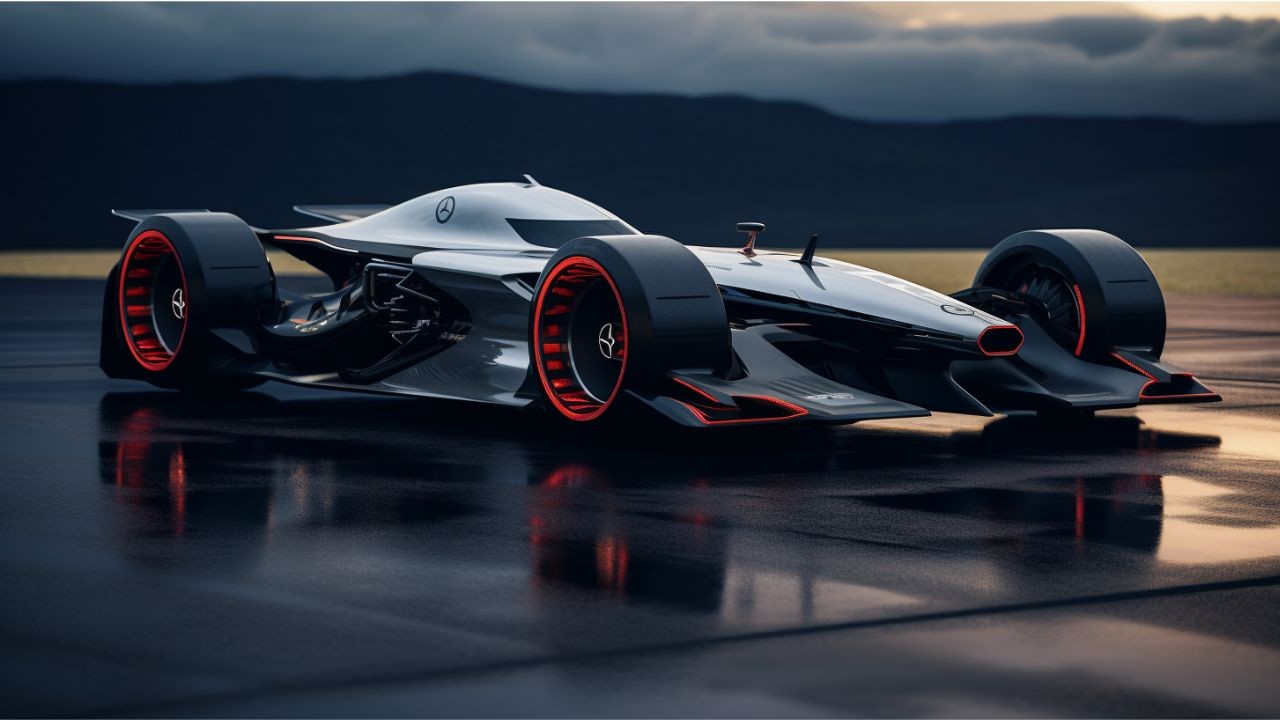
The AI doesn’t decide what to build. It proposes. Engineers decide. That back-and-forth, that human touch, still defines every team’s philosophy. After all, racing isn’t just math—it’s instinct, experience, and adaptability. And frankly, that’s why this shift works. You get the speed of machines and the intuition of people. In a sport where 0.1 seconds can mean everything, that mix might just be the new winning formula.
Formula One has always been at the edge of what’s possible. From turbocharged engines to energy recovery systems, it’s a sport that never settles. Now, with AI entering the pit lane, we’re watching another quiet but crucial evolution.
It’s not flashy. There’s no red button marked “Win Race.” But with faster design cycles, smarter predictions, and sharper engineering feedback, this shift could reshape how fast a team goes from idea to asphalt. The race starts long before the lights go out. And now, it seems, part of it starts in code.
Advertisement

Writer unveils a new AI platform empowering businesses to build and deploy intelligent, task-based agents.

How Edge AI is reshaping how devices make real-time decisions by processing data locally. Learn how this shift improves privacy, speed, and reliability across industries

How does Docmatix reshape document understanding for machines? See why this real-world dataset with diverse layouts, OCR, and multilingual data is now essential for building DocVQA systems
How to classify images from the CIFAR-10 dataset using a CNN. This clear guide explains the process, from building and training the model to improving and deploying it effectively

Discover the best AI art generator tools available today. Learn how you can create AI art from text prompts using powerful, easy-to-use platforms suited for beginners and pros alike
Achieve lightning-fast SetFit Inference on Intel Xeon processors with Hugging Face Optimum Intel. Discover how to reduce latency, optimize performance, and streamline deployment without compromising model accuracy

An AI health care company is transforming diagnostics by applying generative AI in radiology, achieving a $525M valuation while improving accuracy and supporting clinicians

Can a small language model actually be useful? Discover how SmolLM runs fast, works offline, and keeps responses sharp—making it the go-to choice for developers who want simplicity and speed without losing quality
Curious how LLMs learn to write and understand code? From setting a goal to cleaning datasets and training with intent, here’s how coding models actually come together

AI-first devices are reshaping how people interact with technology, moving beyond screens and apps to natural, intelligent experiences. Discover how these innovations could one day rival the iPhone by blending convenience, emotion, and AI-driven understanding into everyday life

Get full control over Python outputs with this clear guide to mastering f-strings in Python. Learn formatting tricks, expressions, alignment, and more—all made simple

The era of prompts is over, and AI is moving toward context-aware, intuitive systems. Discover what’s replacing prompts and how the future of AI interfaces is being redefined